
Polite Criticism and disagreement
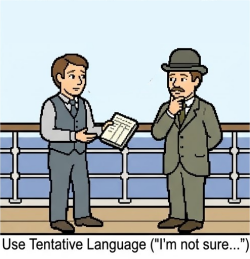
At an advanced level, effective communication tis more than simple politeness you need to know how to disagree with more senior people in a way that lets them save face, and choose the right words to avoid conflict. Direct contradiction or blunt criticism can make people angry and make it harder to get what you want. So you need to disagree politely and criticize, with diplomatic language.
Part I: Diplomatic Disagreement
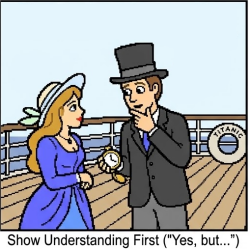
Advanced speakers don't usually directly tell someone that they are wrong. Instead, they disagree by agreeing. This method is sometimes called 'Yes. But ...'
For example:
- Usually I would agree with that, but,...
- You are completely right in theory, but in practice...
- This idea solves the problem exactly, but it creates new difficulties ...
Saying it more politely
Native English speakers understand that direct criticism is seen as aggressive. So they use 'softening words' and 'qualifiers'.
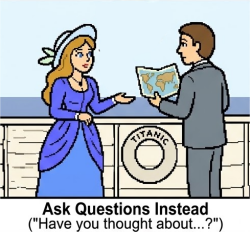
| Blunt / Absolute | Softer |
| You are wrong | There are some things you need to consider here ... |
| That won't work | There are some things we need to improve with that idea |
| You are completely wrong | Are you sure about that? |
In fact one way an English speaker can signal that he completely disagrees is just to raise one eyebrow and say in tomes of deep interest 'Really?'
Disagree by showing problems
For example:
- That's a very good idea. Now, how do we pay for it?
- We can do that – if you don't mind making Janet very angry.
- That's good if it works. But what happens if it fails?
Part II: Don't make it about the person
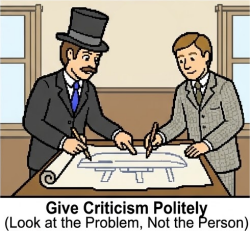
For example:
Not "You didn't do that job properly."
Instead "There are still some things to do here"
Not "You are talking nonsense."
Instead "There are some things that we need to clarify first."
More softeners
The right words can make criticism or disagreement less painful
For example:
- We can't really say that until we know a bit more.
- We will need somewhat more time if we do it that way.
- There's a slight difference between what you want and what we can afford.
Part III:
Informal and diplomatic – same meaning different words.
| Direct / Informal Register | Executive / Academic Register | Functional Strategy |
| "You're wrong." | "Well, that is one opinion" | Not agreeing |
| "That makes no sense." | "I don't follow." | My fault not yours |
| "I hate this idea." | "Maybe there's another way" | Avoid confrontation |
| "You missed the point." | "Let me put it another way." | Say it again |
| "That's impossible." | "Good, but what about ...?" | Show the problem |
| "Fix these mistakes." | "There are a few things that can be improved here." | Make it better |
